Fantasy novels are often set in sprawling and imaginative worlds, filled with unique landscapes, cities, and creatures. To fully experience the depth and richness of these worlds, it is often useful and occasionally essential for an author to provide readers with relevant maps. Let’s explore why maps are important in fantasy novels, what elements make for a good fantasy map, and what pitfalls fantasy cartographers need to be aware of.
Why fantasy novels should have relevant maps included in them:
- Better understanding: Maps provide readers with a visual representation of the world, which can help them understand the geography, locations, and relationships between different places in the story. This can greatly enhance their experience of the story and make it easier to follow.
- Increased immersion: Maps can also help readers become more immersed in the world of the story. They can provide a sense of exploration, allowing readers to follow the journey of the characters and feel like they are a part of the world themselves.
- Cultural representation: Maps can also provide insight into the cultures of the different nations and peoples in the world. For example, the location and design of cities, temples, and other landmarks can reveal important cultural, political, and religious aspects of the world.
Elements of a good fantasy map:
- Clarity: A good fantasy map should be clear and easy to read, with legible labels and symbols. It should also be visually appealing, with a consistent style and attractive design.
- Detail: A good fantasy map should provide enough detail to be useful to the reader, but not so much that it becomes overwhelming or confusing. This includes information on geographical features, cities, landmarks, and other important locations.
- Consistency: A good fantasy map should be consistent with the world and story it represents. For example, it should accurately reflect the distances between locations, the scale of the world, and the relative size of different features. As well as maintaining a consistency in the physics of the fantasy world (i.e. if gravity works the same way, rivers work the same way too—barring some sort of major fantastical forces).
Pitfalls to be on the lookout for:
- Overloading with detail: One common pitfall in fantasy cartography is to include too much detail on the map, making it cluttered and difficult to read. It is important to strike a balance between providing enough detail to be useful and not overwhelming the reader.
- Inconsistencies: Inconsistencies between the map and the story can detract from the reader’s experience and cause confusion. For example, the distances between locations on the map should match the distances described in the text.
- Lack of relevance: Finally, it is important to ensure that the map is relevant to the story. A map that includes too much detail on areas that are not important to the story or that do not play a role in the events can be distracting and irrelevant.
Maps can be an important component of a fantasy novel, providing readers with a visual representation of the world and increasing their immersion in the story. To create a good fantasy map, it is essential to strike a balance between clarity, detail, and consistency, while avoiding the pitfalls of overloading with detail, inconsistencies, and lack of relevance. With the right balance, fantasy maps can greatly enhance the reader’s experience and deepen their understanding of the world of the story.
Check out a few of the maps I included in my fantasy novel, Antiphon: Fire and Stone as well as some I chose NOT to include. In a series, it’s a bit tricky to show places on maps that you hope to take your readers in stories well-ahead of the one you’re telling now. I’m of the opinion that the maps you include should serve the story they’re in.

Above: A regional map that shows the extent of where people travel in the first novel. (Included in the novel)
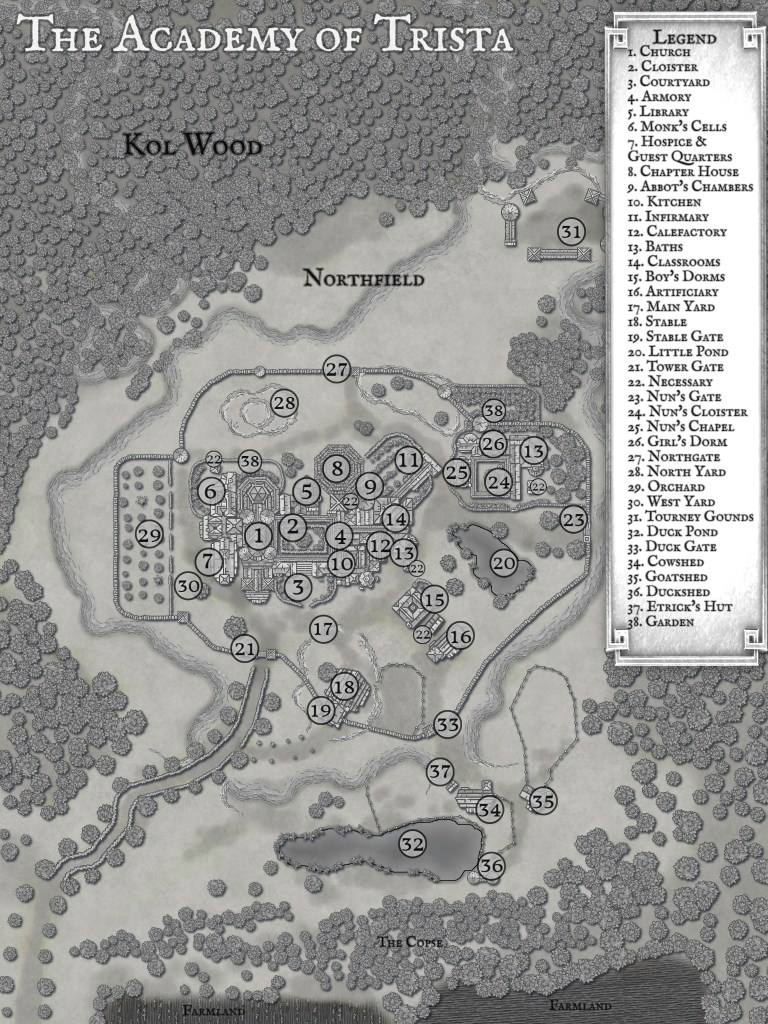
Above: A grayscale map of the Academy of Trista, where the majority of the action takes place in the novel. This was useful for me as a writer, but can be useful for a reader as well as names of areas in the Academy are frequently used. I also included it as a wee jib at J.K. Rowling for never including a map of Hogwarts in her book–and the seeming inconsistencies with places in Hogwarts Castle.
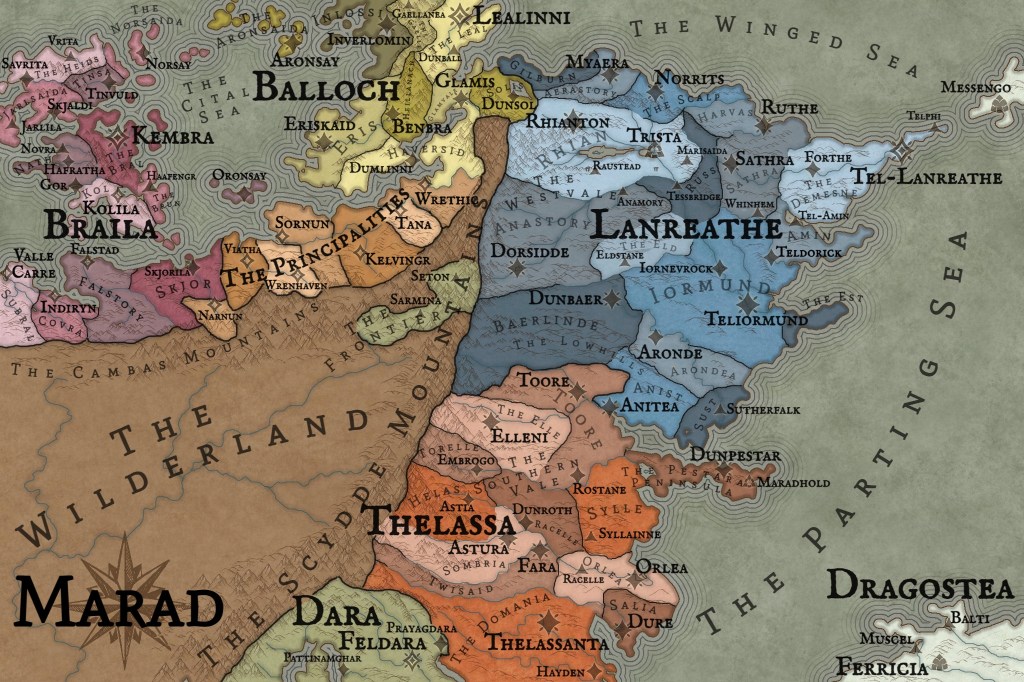
Above: A larger scale regional map that shows the extent of most places mentioned in the first novel. (Included in the novel)
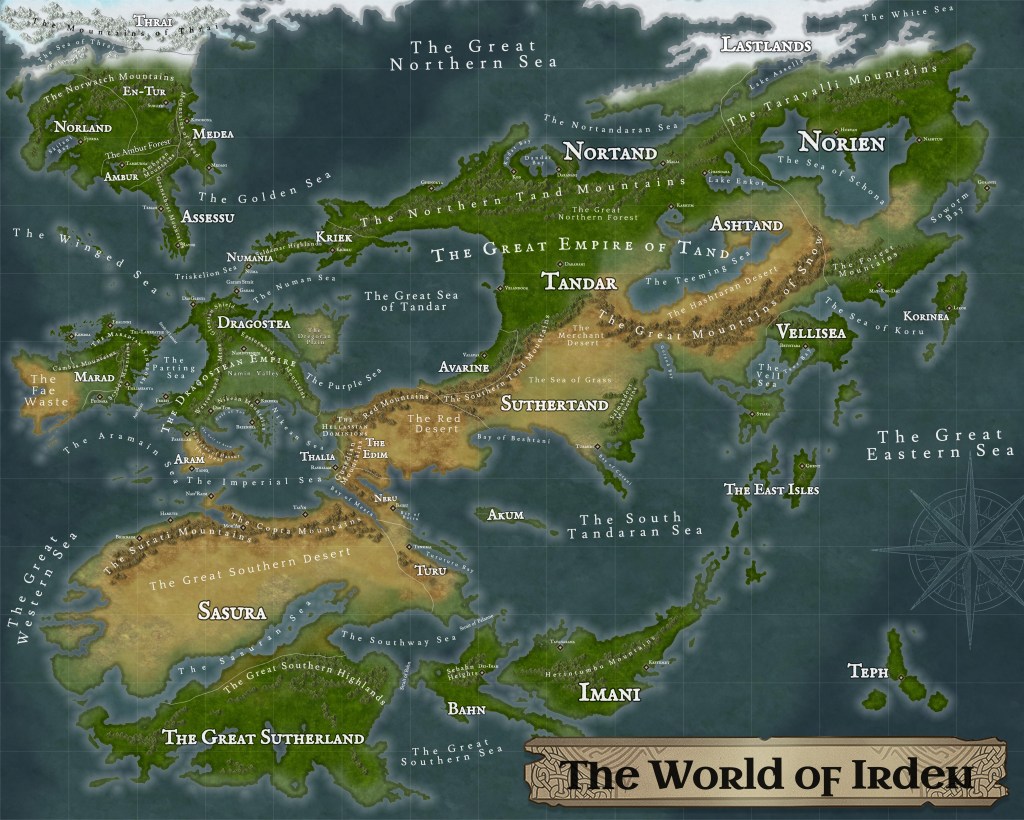
Above: A World Map of Irden the majority of places on this map are not even mentioned in the novel and so it is NOT included. It does help me as an author though, because it gives me some perspective on world events.
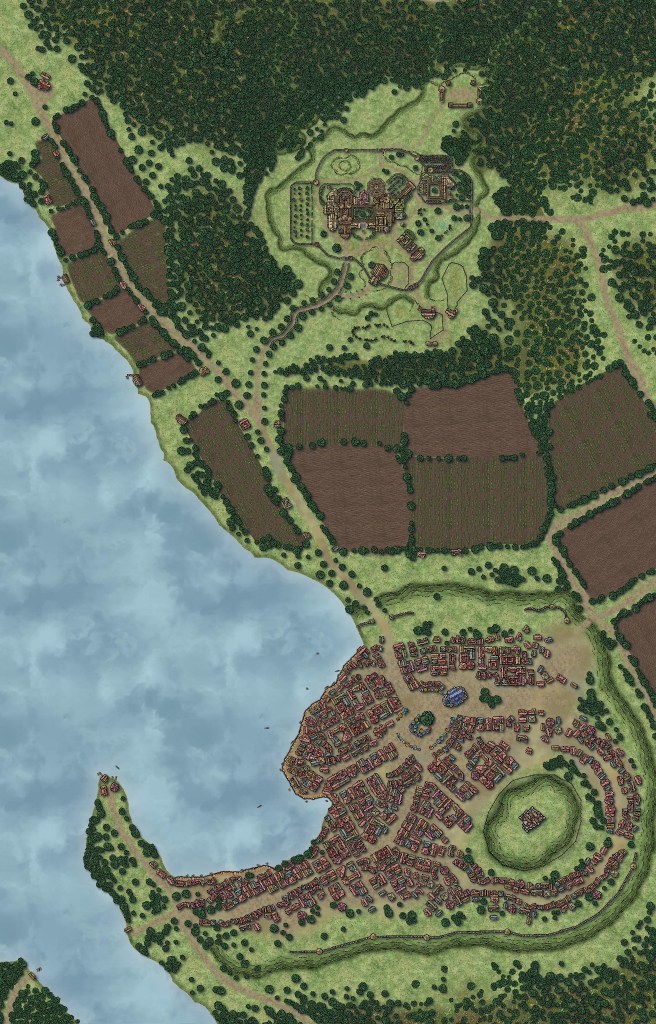
Above: An unlabeled area map of the Academy of Trista and the town of Whitehorse to its immediate south. While this could be useful for a reader, its usefulness is minimal. The text of the novel gives enough context to imagine the geography for themselves. While again, helpful for me to write consistently, I don’t seek to have a tyranny over the reader’s imagination.



 J.E.B. Mungall