
Tag: mungall
-
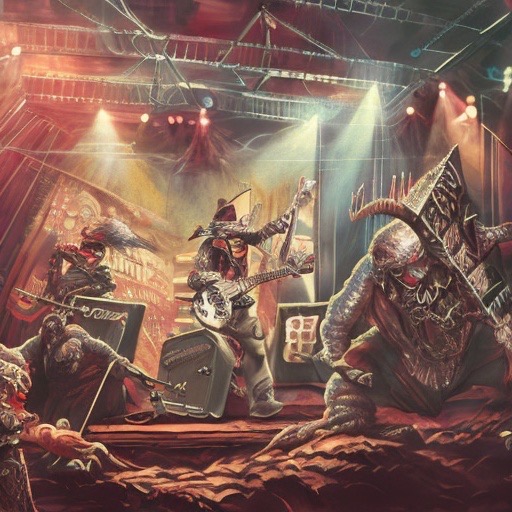
I’m no different from anybody else who gets inspiration from music when it comes to creating non-musical works. Music changes our perceptions of things in ways we rarely even consider. There’s a fun internet trend going about lately that shows scenes from movies where the musical tracking has been removed. Unsurprisingly, the result is often quite comical. I’ve even resorted to using music to demonstrate tone and its effect on mood in my classroom. One of my favorite go-to examples of this is using the official Harry Potter and the Half-Blood Prince trailer juxtaposed with a fan-made trailer that uses different music and cuts to make it much more like a stereotypical teen comedy. The first thing my students note is the difference in music changes perceptions completely.
This change of perception was something I accidentally realized I needed when it came to writing Antiphon: Fire and Stone. Being a fan of much traditional fantasy like The Lord of the Rings, Harry Potter, or Wizard of Earthsea, I realized that my earliest abandoned attempts were much too derivative—maybe not so much in plot but rather in style. I was born in the mid-80s in the American South. So even though I grew up in touch with my Scottish heritage, I’m hardly British like Tolkien or Rowling, and while I’m an American like LeGuin, I’m from a very different generation. I slowly began to realize that I wanted to begin reshaping the fantasy world of Antiphon into something that was a bit more reflective of that American background that I grew up in. This was largely unconscious at the onset, but it became clearer to me as I began to reimagine the lives and relationships of my characters—particularly Kord and Meara. The epiphany came as I was in the midst of writing yet more character notes, wondering whether or not I’d actually get along with Kord as a friend. When I thought, “no, I think Kord is not really someone I’d be great friends with, but he’s someone I’d have wanted to be as a teenager,” I noticed I’d been listening to Blink-182 for hours. “That’s it! Blink-182 is the soundtrack of Antiphon!”
Blink-182’s music, particularly their earlier works, often revolved around themes and experiences that are common among teenage males, like Kord. Their songs capture the angst, insecurity, and rebellion that many young men feel as they navigate the complexities of growing up. I realized that Kord had these elements, but they were things I’d largely grown out of by high school.
Musically, Blink-182’s fast-paced, punk-inspired sound mirrors the energy and restlessness of teenagers. Their lyrics often deal with issues related to relationships, identity, and societal expectations. For example, songs like “Dammit” and “Up All Night” capture the confusion and frustration of trying to find one’s place in the world. This, I realized applied to the entire student-body of the Academy to one degree or another. They ostensibly have some direction, like Awyn or Beorn, but as the plot proceeds, even they find that their resolute direction isn’t as helpful and guiding as they originally thought. Most of the Tristans express some unsurety about their roles in the wider world once they leave the Academy. Meara particularly exemplifies this as she composes and performs a song herself which reflects many of the lyrics of Blink-182’s works. However, she is likewise a bit mysterious for Kord and the reader as her actions are sometimes inscrutable—which I intended to reflect the reality that Kord is experiencing as a young man in trying to understand this intelligent and alluring young woman.
Further, Blink-182’s songs touch on issues like depression, anxiety, and the pressure to conform. For example, “Stay Together for the Kids” addresses the pain of growing up in a broken family, and “Go” deals with a child’s perspective on his mother’s abusive relationship. These songs directly inspired my realization that Kord’s father was (at least at times) both physically and emotionally abusive, himself a broken and bitter man. One of my earliest drafts had Kord’s father directly portrayed as a very loving, emotionally open widower—and resultingly Kord in the early drafts was just too damn well adjusted even given the upheavals in his life.
Externally, Blink-182’s music reflects the challenges that teenage boys face in their interactions with the world around them. Their songs often confront societal norms and expectations and highlight the struggle to find acceptance and belonging. Songs like “Anthem Part Two” celebrates the rebellious spirit of youth, and it played a role in both Kord’s and Awyn’s rebellious and impulsive natures.
Finally, it’s important to note that not all of Blink-182’s work is as serious as this article might make it sound. In fact, much of their work is light-hearted and comical—just like teenagers are apt to be. I felt like it gave me a great balance to figure out how to step back into the mind of a young adult, and with so many different songs, figure out how the various themes were central to many of the characters.
So that’s how I discovered and came back to analyze how Blink-182 shaped Antiphon: Fire and Stone.
-
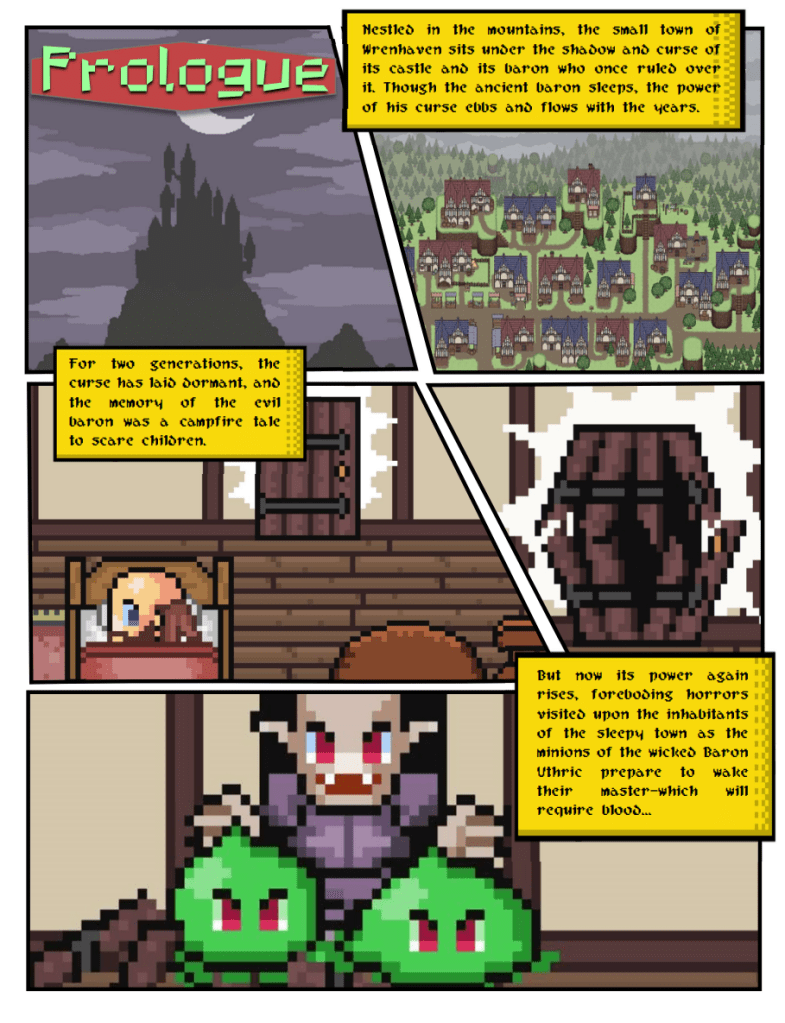
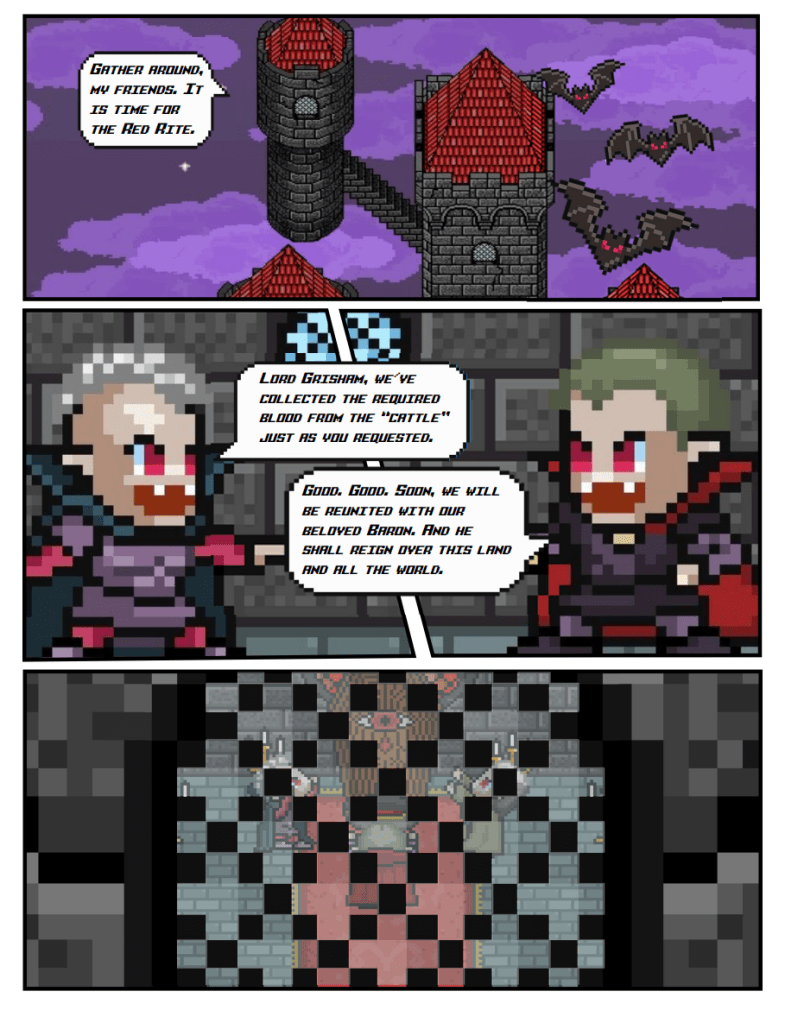
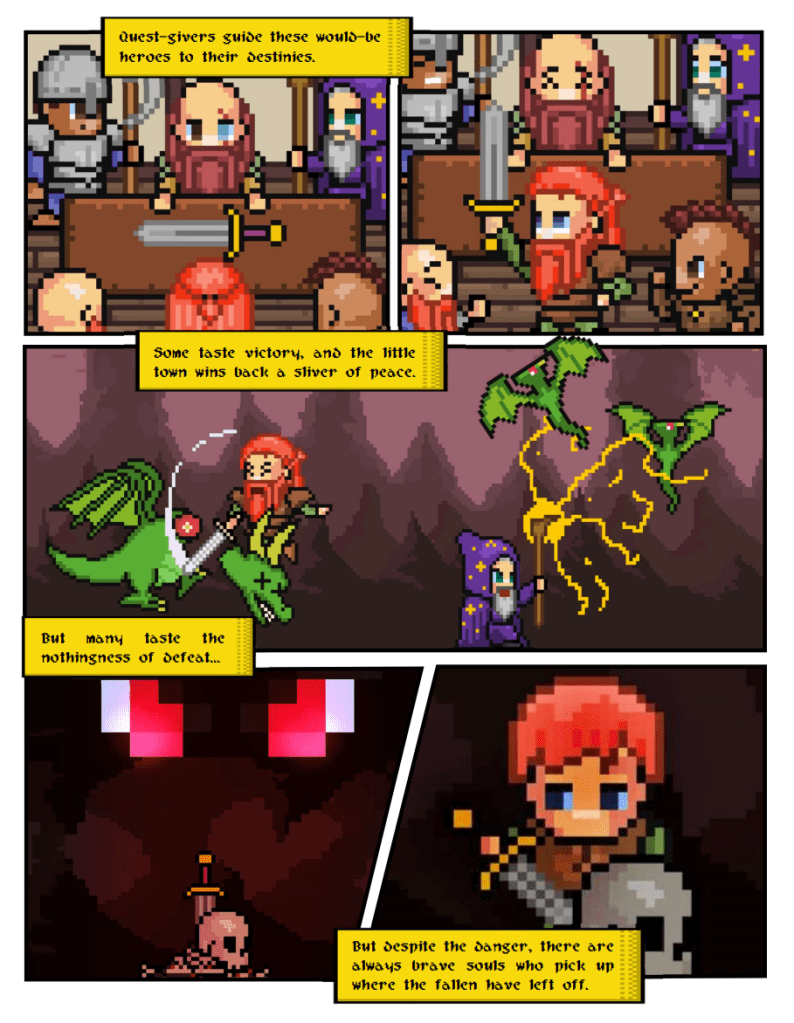
Today, I’m excited to share with you a sneak peek of a project I’ve been working on: a graphic novel inspired by the popular video game series, Castlevania, called Wrenhaven. I’m presenting this in a comical and cute pixel art style in an attempt to add a touch of humor to the serious and gothic setting of these sorts of vampiric tales. While still a work-in-progress, I hope you’ll enjoy this first look at Wrenhaven and share in my enthusiasm for this exciting new project.


-

As a society, we often find ourselves caught up in the trap of moral posturing, feeling a sense of righteousness in condemning the evil and atrocities committed in the world. However, simply hating evil is not enough, and to truly be a moral actor, we must take action to do good. It is easy to assign blame and point fingers at the problems we see, but does this really make the world better or does it create more anger and division? While it may not be feasible for every person to take meaningful action on every issue, it is still important for individuals to be informed and engaged on the issues that matter to them. This involves educating themselves on the issue and sharing that education with others. However, there is a good and bad way to do it, with moral posturing being the latter.
While we should hate evil, true morality is not about feeling good about ourselves for hating it. Just like love is an action rather than a feeling, so too is hate. Hating evil is about taking action against it, and in so doing making the world a better place. Moral posturing can be a problem when it comes to the issue of something like climate change, racism, or mass shootings because it can give people the impression that they are doing something to address the problem when in fact, they are not taking meaningful action. In other words, it can lead to a false sense of accomplishment and complacency, which can be harmful in the face of an urgent and complex problem.
But what does meaningful action look like? That depends on your individual circumstance.
It is not necessarily feasible or practical for every single person to take meaningful action on every issue they hold a strong opinion about. There are many issues in the world that require attention, resources, and action, and it is not possible for any one person to address all of them. It is also important to acknowledge that individuals have different capacities, interests, and priorities, and what is meaningful action for one person may not be the same for another. I’m reminded of the poor widow’s offering in the Bible. The parable of the woman who gave a coin to the offering teaches the lesson that the value of an offering is not determined by its size, but by the sacrifice involved in giving it. In the story, a poor widow gives two small coins as an offering, while a rich man gives a large amount of money. Despite the difference in the amount given, Jesus points out that the widow’s offering is more significant because it represents a greater sacrifice. The widow gave out of her poverty, while the rich man gave out of his abundance. Thus, the parable teaches that true generosity is not about the amount of money or material possessions given, but about the spirit of sacrifice and selflessness behind the gift.
Taking meaningful action requires time, resources, and energy, which may be limited for some individuals. People may have other responsibilities and commitments, such as work, family, or personal health, that make it difficult to devote significant time and energy to every issue they care about. The widow gave out of her poverty, and so each person needs to give of themselves to that which they care about. A single mother working two jobs may feel strongly about an issue like climate change, but her resources are limited to contribute to making change. Her priority is seeing to it that she and her children are properly nurtured and cared for. A college student may have energy and time but limited financial resources and so may be able to give more than the single mom. A well-off retiree has finances and time, but may have limited energy. Every person should ask themselves where they are and what they’re wasting: time, energy, money, talent, connections? It’s important to recognize that meaningful action can take many forms, and that small actions can add up to make a difference. But everyone should remember that they’re not going to change the world themselves. Nor is their voice so powerful that it alone will lead to some tangible change.
Even those who take meaningful action must avoid the trap of moral posturing. They must recognize that their efforts, while valuable, are only one part of a larger solution, and that there is always more work to be done. They should also avoid judging or condemning others who are not able to take the same level of action or who have different opinions or approaches to the issue. Instead, they should seek to build bridges, educate others, and work collaboratively towards a common goal.
 J.E.B. Mungall