Sexual selection refers to the process by which certain traits are favored in a species due to their attractiveness to potential mates. In the human species, sexual selection is often driven by females, who have the ability to choose their partners based on a variety of factors. One key factor in female sexual selection is the display of traits that signal good genes and overall fitness, such as physical attractiveness, intelligence, and social status.
Research has shown that women are more likely to choose partners who display traits associated with good health and genetic fitness, such as symmetrical facial features, a deep voice, and a masculine physique. In addition, women are often attracted to men who possess traits associated with social status and wealth, such as high levels of education or a prestigious occupation. These preferences may reflect the ancestral environment, where males who possessed these traits were more likely to provide resources and protection for their offspring, increasing their chances of survival and reproductive success.
When examining the portrayal of male love interests in harlequin romance novels, it becomes apparent that many of them fall into certain archetypal categories that appeal to female readers. The heroes in these novels often possess traits that signal strength, power, and status, and are frequently portrayed as vampires, pirates, werewolves, billionaires, and surgeons. These archetypes may serve as stand-ins for the traditional “knight in shining armor” fantasy, providing readers with a form of escapism and wish fulfillment. However, it is worth exploring how these archetypes fit into the larger context of female sexual selection, and how they reflect deeper psychological desires and preferences.
One common thread that runs through many of these archetypes is the idea of the “beastly” or “wild” male who is tamed and domesticated by the female protagonist. This trope is particularly prevalent in the portrayal of werewolves, vampires, and other supernatural creatures, where the male love interest is often depicted as a dangerous and unpredictable force that can only be controlled by the love of a good woman. This theme is also present in the portrayal of billionaire and surgeon characters, who may be emotionally closed off or otherwise distant until they are “tamed” by the female protagonist’s love. This idea of taming the beast taps into deeper psychological desires for control, safety, and security, as well as a desire to transform and shape our partners to fit our idealized notions of love and romance.
While the heroine archetype in romance novels often involves the taming of a beastly male, the male hero archetype frequently involves the opposite dynamic: the protection of a vulnerable female from a dangerous and unmitigated beastly threat. This theme is often seen in the portrayal of male characters as knights, soldiers, or other protective figures, who use their strength and bravery to shield their female love interests from harm. The contrast between these archetypes reflects broader cultural narratives about gender and power, with the male hero representing strength and dominance, and the female hero representing control and transformation. Despite these differences, both archetypes speak to deep-seated psychological desires for love, security, and protection.
The development of the male hero archetype can be traced back to ancient storytelling traditions, where men would tell tales of great heroes who possessed certain characteristics that were seen as desirable to potential mates. These characteristics included physical strength, courage, and intelligence, as well as the ability to provide for and protect their loved ones. Over time, these archetypes became embedded in cultural narratives, and were reinforced through literature, film, and other forms of media.
The male hero archetype can be seen as a form of appealing to the sexual selection governed by females across cultures in the human species, in which men who display these traits are seen as more attractive to potential mates. At the same time, these archetypes also reflect universal cultural ideals about masculinity and power, which have evolved over time in response to changing social and economic conditions.
Despite their historical roots, the male hero archetype remains a powerful and enduring cultural trope, reflecting deep-seated desires for strength, courage, and protection. While the specific characteristics of the hero may change over time, the underlying psychological motivations remain the same, and continue to shape our cultural narratives and our ideals of romance and love.
I decided to look for this in my own writing, and while it’s obviously present in The Legend of Tam Lin, the plot and characters are products of Scottish folklore. I turned to Antiphon: Fire and Stone to see if this concept shows up, and I think it does. Kord, who struggles with his supernatural ability to conjure up fire, is in a great sense beastly and untamed. However, he is seeking to control it and finds great help and solace with his romantic interest in the tale, Meara. Awyn, on the other hand, being a postulant monk has no mitigating romantic interest, and though his gift is much less “beastly” than destructive fire, he has a troublesome knack for acting impulsively and rashly (to his detriment) that his platonic friends do not do well to wholly mitigate before the damage is done. I would be curious to hear what you think of this analysis and hope you check out Antiphon: Fire and Stone on Amazon.
Below is Chapter 2: Roughspun from my fantasy novel Antiphon: Fire and Stone.It’s the introductory chapter for Awyn, one of the two protagonists of the story. I always debated about whether or not it should be the first chapter. I have always enjoyed writing Awyn and his friends much more than Kord. I think maybe because I liked having established relationships to guide the character–and the dialogue.
Awyn scratched his neck. The itchy roughspun habit still aggravated his skin. He supposed it would eventually stop bothering him as he toughened to his new clerical robes. He lay prostrate on the stone floor of his dormitory, hoping the new ritual didn’t bother his roommate. Trying to think of something else to pray for, he drifted to sleep.
Stiffness and sticky drool waited for Awyn as he woke. Beorn nudged him with his foot. “The King of All loves prayer,” he said, “but he never asked you to sleep on the floor for him.”
“Oh aye, I suppose he…” Awyn stretched, “didn’t.” He sat up, and it felt like most everything ached just a wee bit. “I’ll get better at it.” Though he wasn’t quite sure how yet.
“Aye, aye. So, are you ready to ride this morning? Master Artea has me teaching our little cohort to tilt at the Ballish quintain.” Beorn smiled broadly as Awyn groaned. “It’ll be fun!” said Beorn. “Besides, whether you take holy vows or not, riding is a skill you really should have. And you need the practice.” He patted Awyn on the cheek and left.
The rising sun warmed Awyn’s cheek as he walked out to the field in his new sandals—the footwear of a monk. His toes grew wet with dew, and the chill spread over him. But he knew this was part of the point—casting off worldly comforts like shoes.
He saw he wasn’t last to arrive at least. One thing that wasn’t going wrong this morning, he thought. Alfrich wasn’t here yet. Typical, he thought. Fiona and Beorn each waited with a horse: Beorn with his big Iormundi destrier Straya, and Fiona with a sleek rouncey that looked quite small next to Beorn’s steed.
“Oi, Awyn—good mornin’ to you.” Fiona’s loud and thick Lanrean accent stood in such contrast to her frame. Her laugh only made that more pronounced. Covering her gaping mouth with one hand and pointing at Awyn’s feet with the other, she said, “You can’t possibly be serious with those. You can’t ride in sandals.”
Awyn felt a bit of heat rise to his cheeks. “Fiona, I am a postulant—this is what I wear now.”
“Oi, I know all that,” she said, “but this ain’t traipsin’ through the winding roads, preachin’, tendin’ to the sick, feedin’ the poor. It’s ri-ding.”
Beorn casually piped in, “Clerics are permitted to wear boots to ride—you know that.”
I didn’t, actually. How did Beorn? he wondered. But rather than look a fool and admit his own ignorance, he shrugged, “I could wear them, but I need to learn how to wear these without complaint.” He fidgeted with his Imlass Tree pendant and frowned. His friends hadn’t made this decision, and they were still getting used to the changes too.
“So, where’s Alfrich?” asked Fiona.
“Late,” said Beorn.
She rolled her eyes. “Well, nar…”
“Is he still doing his ‘night thing?’” asked Awyn.
“Which one?” asked Beorn. “The gambling thing or the fighting thing?”
Awyn shrugged. “Either.”
“Then yes,” said Beorn.
“I thought Brother Cowlen got him to stop the gambling thing…” said Awyn.
“Well mostly,” said Beorn, “but I think he mainly just gambles on himself to win his fights.”
Fiona bit her lip. “Oi, fairly safe bet, yeah.”
Beorn nodded. “As long as he keeps it to fists, anyway.”
“What about Master Artea?” asked Awyn.
Beorn adjusted the bridle on his horse. “I told you, he tasked me with teaching today.”
“Oh, yeah,” said Awyn as he kicked the dirt with his heel.
Fiona patted the rouncey’s muzzle. “Well, how long we waitin’ for our noble scion?”
Awyn looked at the dirt accumulating on his feet. “Did he even come in last night?”
“Not sure,” said Beorn. “Did you hear him creep in during your prayers?”
Awyn shook his head.
Fiona raised an eyebrow. “Prayers?”
Beorn nodded seriously. “He stays up late praying now.”
Fiona narrowed her eyes. “That’s kinda obnoxious to do when people are sleep.”
“It’s silent…” said Awyn, “meditative.”
Fiona nodded. “Oh, oh, oh. I see, yeah. That makes more sense.”
As the trio continued to talk about Awyn’s new night-time routines, they saw the fire-red hair of their fourth cohort member, bobbing down the hill from the Academy wall to the tilting field. His gait had a deep swagger, and his face sported a nasty black eye. As he approached, Awyn caught the stench of sour ale on his breath.
“Sorry to be late,” said Alfrich, “had to detour through the orchard.”
“And why’s that milord?” asked Fiona mockingly.
Alfrich pursed his lips and gave a sidelong glance at Awyn. “Stayed out late.”
Still doesn’t trust me, thought Awyn as he adjusted his wool cap.
Beorn ran his hands roughly through his dark hair. “Look, we only have till Noothsday till we have that tournament over in Dorsidde. Can we all ride now?”
Alfrich frowned. “But there’s only two horses.”
Beorn threw up his hands. “Not all at the… just shut up, Alfrich. You’re riding first. Here.” Beorn handed Alfrich the reins to his great horse. “Take Straya, and just walk her down the route you want to take to the quintain, and then we’ll have a go at speed, then we will throw in the lance.”
Awyn narrowed his green eyes intently as Alfrich took the horse through the route, minding for any burrows or holes. Under his long baggy sleeves, he subtly mimicked the young noble’s actions with the reins—noting how he encouraged the beast with his heels. Alfrich had been riding since he could probably remember—that came part and parcel of being of any noble house—a class to which Awyn decidedly did not belong. He bit his cheek wondering why he and Fiona had to train with the lance when they’d never be allowed to use it in a tournament. Master Artea had said something about it being important to understanding the hastilude better, but Awyn wasn’t convinced there was that much wisdom in that. But whether he liked it or not, he knew Beorn was right, riding was a useful skill.
After Alfrich had made his two soft unarmed runs, Beorn handed him a blunt lance—just a long pole with a small, weighted bag on the tip. “Now run it again, slowly with—” Started Beorn, but Alfrich shot off on Straya at a gallop. He couched the lance bringing it down at the quintain’s round target mounted at one end of a cross piece and struck it near the edge. As the lance connected, the sandbag attached to the arm opposite the target swung around and walloped Alfrich on the back of the neck. He lurched forward on the destrier’s mane dropping the lance, and Awyn thought he saw him go limp—but Alfrich remained seated.
Beorn sighed tensely while Fiona crossed her arms with a smirk. It seemed a long time, but Awyn knew it was only a moment until Alfrich sat up again on the mount, hand on his neck, and brought Straya back to the group at a slow walk.
“That looked like it hurt somethin’ wicked, yeah?” said Fiona.
Alfrich chuckled and grinned. “I’ve taken worse.”
“Yeah,” said Beorn, “well if you just listened before running off.”
“Yes, yes—I know,” said Alfrich. “I’ll give you gray hairs or some such. I’ve tilted at a Ballish Quintain before.”
Awyn shrugged. “Didn’t look like it to me.”
Alfrich hung his head and sighed, still smiling. “The Brother is giving me pointers on tilting now?”
Awyn just shrugged again. He knew he couldn’t ride half as well as Alfrich, but he also couldn’t help taking a jab. That was how they were—or used to be. Awyn felt glad for the retort, but being only half sure Alfrich was being playful, he didn’t continue.
“He ain’t wrong, Al,” said Fiona. “You look drunk still.”
Alfrich swallowed. “I’m not drunk. I’m hungover. I’m tired. Might even wish I was drunk. But I’m definitely not.”
“I said ‘look drunk.’”
Fiona and Alfrich continued into bickering and Beorn sighed again, clearly exasperated. Awyn knew he’d been looking forward to teaching this lesson. He wanted to help get things back on track. “Okay, okay. Alfrich, I’m sorry. I’ll go next and I’m sure you can make fun of my run.”
Alfrich dismounted Straya and tried handing the reins over to Awyn. “Och, nope. Sorry, Awyn,” said Beorn, “but Straya is a bit much horse for you.” Take the rouncey through the same course: at a walk, at a run, then with the lance—walk and tilt.”
Awyn flushed a little at being turned away from Straya (though he knew full-well Beorn was right.) After the moment passed, he felt relieved to not have to manage the larger beast.
The rouncey proved a little skittish. Awyn’s path to and from the quintain was jagged at best—unlike Straya’s direct and steady pace as she’d carried Alfrich. But whether the differences were due to the differences in quality of the beasts, riders, or a combination, Awyn couldn’t tell. But he felt unhappy about it and tried to focus on the things he knew he needed to do. It felt so awkward being up off the ground like this—even though it wasn’t all that terribly high. He couldn’t anticipate the movement of the horse underneath him. The constant feeling of sliding off the saddle irked him. He gripped more tightly with his thighs, and his freckled knuckles grew white on the reins.
Awyn remembered back to his young childhood on the farm, seeing a boy thrown from a horse. The boy had fallen on his head and broken his neck and died there in the field. Awyn kept seeing the boy’s crooked neck and lifeless terrified eyes.
“Well done, now a little faster,” called Beorn. “Take it at more of a trot—hold off on the cantor.”
Awyn nodded, unsure how exactly to “hold off on the cantor.” He kicked his sandaled heels into the horse, and she trotted forward, but he couldn’t keep her steady. His heels bounced around and the reins, while tight in his hands, weren’t steadying her course. Beorn shouted instructions, and Fiona encouragement—Alfrich just stood smirking, arms akimbo. The young rouncey stopped in the tall grass and began grazing.
When he heard Fiona stifle a cackle, Awyn considered he’d been given a troublesome horse on purpose. But as he patted the rouncey on the neck, they both saw a snake slither, and as she spooked, leaping to the side, Awyn slipped off her back, his sandal caught in the stirrup. She bolted through the grass and into the woods dragging Awyn behind her. Unable to loose his foot, Awyn took hoof and ground to body and head. He felt the horse jump again, tearing his sandal free from his foot and his foot free from the stirrup.
He felt like he floated for a moment—then he firmly kissed the dirt. He struggled to inhale as every part of him seemed to ache. He opened his eyes and couldn’t bring them in focus. But his nose still worked as he smelled the unmistakable reek of rotting meat close by. And as that registered, he heard soft padding and stamping in the leaves—too soft, too small to be the horse. He rolled over onto his side—still having trouble focusing, but the growls and yips gave them away—curren. The wild dogs began to encircle him. The new danger helped him regain his senses. He found a short thick stick by him and took it as he stood—the pain in his foot and ribs felt sharp, but nothing he couldn’t handle. He saw now that the reek came from a body—a human body—or at least the bottom half of one. He’d interrupted their meal.
I can’t let them continue desecrated that body, he thought. He swung at one of the three curren with the stick. It backed away, as the others closed some distance. Awyn changed targets, recentering himself to the dead body—defending it. He continued like this only a short time but exhausted himself nevertheless until one of the curren managed to slip behind him and leap on his shoulder, tearing into his habit exposing his heavily scarred back. He cracked the stick on the back of the curre, but the other two clung to him already. He collapsed under the assault, but then the heavy hoof falls he felt underneath him carried one away with a shrieking whine and the others fled.
Beorn had broken the practice lance on the curre. It weakly limped off. Beorn dismounted and caught Awyn as he tried to stand and set him gently on the ground. Alfrich and Fiona too came running into the clearing.
Beorn checked Awyn over for wounds. “What happened? Oh, they got you. Damn…”
Awyn craned over his shoulder with gritted teeth, seeing the bloody wound on the back of his shoulder. The skin appeared to have been torn away. “It’ll be another scar.”
Fiona now too knelt by Awyn. “Let’s go clean it—animal bites can be bad bad. Brother Urskine’s got herbs to keep wounds from growing dark.”
Awyn smiled, he knew he’d be fine. Fiona didn’t know what he could do yet but now was as good a time as any. Awyn took a deep breath and put his hand on the loose flap of torn skin, spreading it flat back over the wound. He hummed to himself one of his favorite hymns—which was in part concentration, but also in part so he could cover the soft humming sound that came from his hand.
Beorn sat back and watched what Awyn knew he’d seen before on at least one occasion, but Fiona stood up abruptly mouth agape. “You mean… Imlass burning! How come no one ever told me?”
“Awyn follows the rules,” said Alfrich with his arms crossed.
“Didn’t you know about it?” said Fiona turning to the fiery-haired young man.
Alfrich shrugged. “Yeah, well I’ve seen him bathe and shit. He’s got a lot of scars. I asked questions.”
“Fi, just hush a moment and let him concentrate,” said Beorn as he began inspecting Awyn for other wounds. He turned back to Awyn. “You have a bad bruise on your ribs here.” Awyn flinched as Beorn touched the spot. “Aye, maybe broken.”
Awyn stopped humming and removed his hand from the wound. He wiped away the blood with his sleeve revealing a red and raw scar—an ugly but closed wound, for all purposes healed (but still quite tender to the touch.)
Awyn placed both hands on his side and began humming a different hymn. He got halfway through the first verse before he faltered. “I can’t… Guys, I’m spent. Has anyone checked out the body?”
“Body?”
“The legs over here. You don’t smell it?” said Awyn, gesturing.
Alfrich and Fiona walked over to where the curren had been eating. “Yeah, but… who?” said Fiona.
“They must’ve dug him up. Looks like the rest of him is just buried,” said Alfrich.
Beorn helped Awyn up to go inspect as well. The exposed legs were largely covered in roughspun trousers, with sandals on the feet, but the calves and thighs had been badly mangled. “We don’t bury people like this,” said Awyn.
“What with their legs out an’ all?”
“No, he means upside down,” said Alfrich.
“Or the woods? Not even a graveyard, everyone ought to be buried in a hallowed graveyard.” said Beorn.
“All of it’s wrong,” said Awyn. “The legs don’t look like they were ever buried. The curren didn’t dig them up. We never bury anyone upside down either. At least we don’t in the Maradian Kingdoms… well the Bethiri don’t. We allow for graves outside of graveyards though—but it’s not common where there are graveyards to be buried in. And there are at least three around here. Also, we don’t bury people in their pants. They get a burial shroud.”
All nodded their heads in deference to Awyn’s understanding of religious practice—as it slowly dawned on them what the implications of that might mean.
“Murder,” muttered Alfrich, Beorn, and Fiona in unison.
“Wait, what?” said Awyn.
Fiona rolled her eyes. “He’s been murdered, obviously.”
Awyn had been so focused on the ritual of things, he was quite taken aback at their unanimous declaration. “Wait, wait, wait…”
Alfrich shrugged.
Beorn nodded.
Awyn glanced down at his sun-tanned toes. “Then—we must inform the Brothers. Beorn, can you ride back and get Brother Eorlund?”
With an “Aye,” Beorn mounted Straya and was off.
“Fiona, scout around us to see if we’re missing anything,” said Awyn.
She nodded. “Right, yeah.”
Alfrich put up a hand to Awyn. “Let’s you and I look more closely at the body and then get your bossy-ass to your bed.”
Awyn nodded weakly—he felt happy to see Alfrich treating him a little more like normal—he’d been distant of late, like his becoming a postulant to the Tristan Order had been a personal insult.
Alfrich knelt where the torso was presumably buried. “Packed pretty tight—but it’s a bit soft. It’d be a stretch, but maybe he just fell into some mud and drowned?”
Awyn shook his head. “Aye, that’s a stretch—with his legs out?”
“Then foul play is the most likely,” said Alfrich.
“Wouldn’t the point be to hide the body then?” asked Awyn.
Alfrich shrugged. “Got spooked and couldn’t finish? Made too shallow of a hole and went with it? I don’t know. What are you thinking?”
“Maybe you are all right and this is murder,” said Awyn, “but there is something strange about this ‘burial’ if it is that at all. I think I need to go to the library and see what I can dig up on burial practices of people other than our own.”
“Oi! Boys, take a gander at this…” Fiona had made her way back to the two holding a ring of keys. “These. Now tell me whose these are.”
Slow recognition crept up Awyn and Alfrich’s faces. Awyn knew exactly to whom those keys belonged. He glanced at the mangled legs and back to the keys. “Old Etrick…” they muttered together.
Yesterday, we compared the professions of teaching and professional wrestling, highlighting the similarities between the two in terms of their performance-based nature and their ability to captivate and inspire audiences. In today’s blog post, we will delve deeper into this comparison and explore how the lessons learned from the success of three iconic professional wrestlers can be applied to the classroom. From their unwavering commitment to their craft to their ability to adapt to changing circumstances, professional wrestlers offer valuable insights for teachers looking to engage and motivate their students. So, whether you’re a veteran educator or just starting out, read on to discover how you can bring a little bit of the ring into your classroom.
To be a successful professional wrestler, one needs:
Physical and mental fitness and strength
Adaptability and quick thinking
Showmanship and charisma
Acting ability
Good “mic skills” (engaging public speaking)
Strong work ethic and discipline
Understanding storytelling
Good psychology and understanding of the audience
Willingness to learn and grow
Resilience and determination to overcome obstacles and injuries.
Which of these translate well into teaching school children? Literally, all of them. Are they all equally important? Does a teacher or wrestler need them all in equal proportion? Of course not! The most iconic wrestlers have most of these in some proportion or another—or know how to compensate for their particular shortcomings. Let’s look at some of the most iconic wrestlers and see how their particular characteristics could be applied to the classroom.
“The Macho Man” Randy Savage:
One of the most iconic professional wrestlers of all time, Savage was known for his flamboyant personality, charismatic promos, and intense in-ring style. One of the main characteristics that made Randy Savage stand out from his peers was his unique and over-the-top personality. He was known for his wild, untamed energy and his trademark gravelly voice, which made him one of the most recognizable and charismatic wrestlers of his era. In the ring, he was as intense as he was on the microphone—apt to take risks and delivering devastating blows from the top turnbuckle.
The unique and over-the-top personality of “Macho Man” Randy Savage could be applied to a teacher in several ways to make them more effective in their role:
Charismatic: Just like Randy Savage, a teacher could use their charisma to engage students and keep their attention in the classroom. By being energetic and enthusiastic about the subject matter, a teacher can create a positive learning environment that students are eager to be a part of.
High Energy: Randy Savage’s high energy and intensity could be translated into a teaching style that is energetic and passionate. A high-energy teacher can create a dynamic learning environment that is engaging and motivating for students.
Unique Personality: Randy Savage’s unique personality set him apart from his peers, and the same could be said for a teacher with a distinctive personality. By being authentic and true to themselves, a teacher can create a positive connection with students and build trust in the classroom.
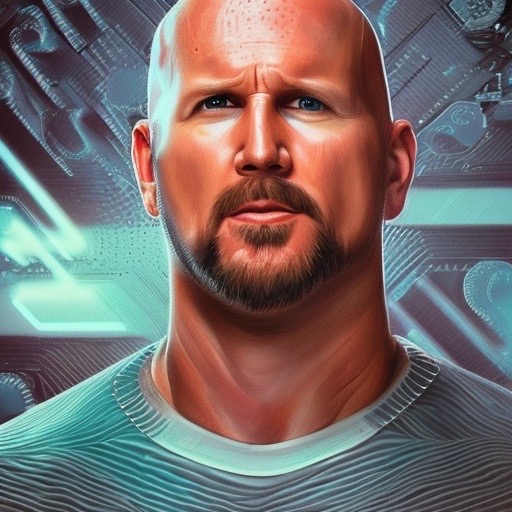
“Stone Cold” Steve Austin:
One of the most popular professional wrestlers of all time, Austin is known for his tough, rebellious attitude and his charismatic, anti-hero persona.
One of the key factors that made Steve Austin stand out from his peers was his unique and captivating personality. He was known for his anti-authority attitude, which resonated with audiences and made him a fan favorite. Another aspect of Steve Austin’s success was his in-ring style. He was known for his hard-hitting, no-nonsense approach, and his willingness to take risks and push the boundaries of what was acceptable in the ring. Finally, Steve Austin was known for his ability to adapt to changing trends and styles in the industry, as well as adapting his personal style of wrestling due to numerous injuries.
The rebellious and adaptable characteristics of “Stone Cold” Steve Austin could be applied to a teacher in several ways to make them more effective in their role:
Rebel Attitude: Steve Austin’s anti-authority attitude could be translated into a teaching style that encourages students to think for themselves and challenge the status quo. By fostering a classroom culture that values critical thinking and independent thought, a teacher can create an environment that encourages students to be creative and innovative.
Adaptability: Steve Austin was known for his ability to adapt to changing trends and styles in the wrestling industry as well as personal injuries, and a teacher can apply this same mindset by being open to new and innovative teaching methods. By being flexible and willing to try new approaches, a teacher can create a dynamic and engaging learning environment that keeps students motivated and interested.
Open and Frank Communication: Steve Austin was known for his straight-talking, no-nonsense approach, and a teacher can apply this same approach by being open and frank with their students. By communicating openly and honestly, a teacher can build trust with students and create a positive and supportive learning environment.
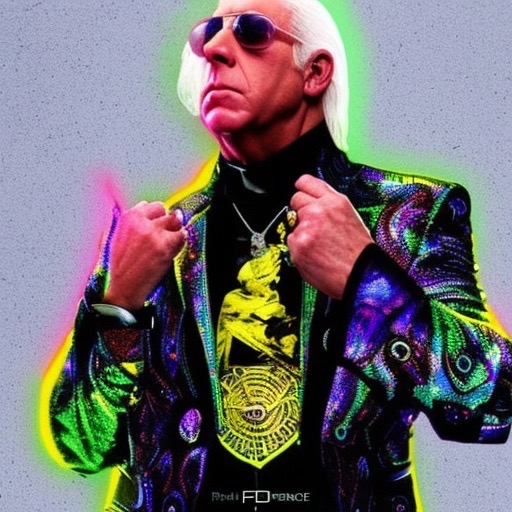
“The Nature Boy” Ric Flair:
One of the most legendary professional wrestlers of all time, Flair is known for his flamboyant and flashy style, as well as his athletic ability and mic skills. One of the key factors that made Ric Flair stand out from his peers was his in-ring skills, known for his unique offensive style, as well as his ability to sell his opponent’s moves and make his matches feel intense and believable. He was also a master of the psychological aspect of professional wrestling and was able to draw audiences in with his promos and interviews. Outside of the ring however, Flair shined even more, being over-the-top and flashy, complete with expensive suits and lavish jewelry. His “Wooooo!” catchphrase became one of the most recognizable and iconic in wrestling history. He was and is a true showman, and his matches were always a spectacle.
Finally, Ric Flair is known for his longevity and his ability to remain relevant in the industry for many years without changing too much of what made him successful in the first place (notably having rejected taking on a “Spartacus” gimmick he didn’t believe in). He was a mainstay of the wrestling world for several decades and has “retired” several times, but between a personal passion for the business and fan demand, has consistently come out of retirement to wrestle matches even into his 70s.
The characteristics of Ric Flair could be applied to a teacher in several ways to make them more effective in their role:
Passion: Ric Flair was known for his passionate and energetic style, and a teacher can apply this same approach by being enthusiastic and passionate about their subject matter. By being passionate about their subject, a teacher can inspire and motivate students, making their lessons more engaging and enjoyable.
Authenticity: Ric Flair’s commitment to being true to himself set him apart from his peers, and a teacher can apply this same approach by being authentic and true to themselves in the classroom. By being themselves, a teacher can create a more relaxed and comfortable learning environment for students, allowing them to connect with the teacher on a personal level.
Understanding of Psychology: Ric Flair is a master of the psychological aspect of professional wrestling, and a teacher can apply this same understanding to their own teaching. By understanding how to engage and motivate students, a teacher can create a positive and supportive learning environment.
Showmanship: Ric Flair was a true showman, and his matches were always a spectacle. A teacher can apply this same approach by making their lessons entertaining and engaging. By incorporating interactive elements and making their lessons fun and engaging, a teacher can hold their students’ attention and keep them motivated to learn.
Learning from some of the icons of wrestling, being true to their own styles, strengths, and abilities, a teacher can create a more authentic, confident, inspiring, and empathetic learning environment for students. This can lead to a more positive and engaging learning experience for students, helping them to reach their full potential.
An artistic styling after the likeness of “Macho Man” Randy Savage
Professional wrestling continues to be a popular form of entertainment, particularly among younger audiences. The allure of this sport can be attributed to a number of factors, including its entertainment value, which combines drama, stunts, and storytelling. Wrestling offers an escape from reality and allows fans to immerse themselves in a world of larger-than-life characters. Additionally, wrestling fans often form a tight-knit community, bonding over their shared love for the sport. Young people often view professional wrestlers as role models, admiring their physical prowess and confident personalities. The accessibility of professional wrestling, with events broadcast on television and available for streaming online, also contributes to its popularity among younger audiences.
Professional wrestling and teaching may seem vastly different on the surface, but upon closer examination, it becomes apparent that many of the same qualities are required for success in both fields. From quick thinking to the ability to captivate an audience, the traits necessary for success as a professional wrestler are not unlike those required of an effective educator. In this article, we will explore the parallels between the two careers, comparing and contrasting the attributes of showmanship and charisma, acting ability, adaptability, communication skills, work ethic and discipline, storytelling, openness to learning, understanding of audience psychology, and resilience.
Let’s break down why professional wrestling is popular among younger people and how each of these can apply to the teaching profession:
Two muscular wrestlers in silhouette and posing
Entertainment Value: Wrestling combines high-flying stunts, drama, and storytelling, providing a form of entertainment that appeals to many people. We shouldn’t see entertainment as a dirty word in education. Whether we like it, or whether we don’t like it, it’s the case that getting the attention of our students—and keeping it—is a never-ending battle, and it’s a battle that we have no choice but to win. Teachers have to create consistently engaging atmospheres for their students, whether it is through interactives, humor, or real-world applicability, entertainment is about engagement.
Escapism and Storytelling: Wrestling offers a break from reality, allowing viewers to immerse themselves in a world of larger-than-life characters and over-the-top storylines. Teachers too, must be storytellers. I remember a conversation I had a few years ago with a bright but unengaged student who simply didn’t care about our English class or the literature we were studying. I can accept that. I didn’t like every piece of literature I studied in school either. In our conversation, he shared more of what he was actually interested in: metaphysics, and subjects related to it. While not my field of expertise, I asked him who he liked to listen to on the subject and Neil DeGrasse Tyson was one of the names that stuck out. I pointed out that Dr. Tyson’s fame is not due solely to his intelligence, but due to his ability to understand elements of good storytelling. He allows his audience to become absorbed in his narrative and unwittingly engaged in learning about things they would not give the time of day if presented in a dry lecture. I said to my student, “I don’t care if you learn about Beowulf. That’s not really what you’re going to need to take from it. For your purposes, Beowulf is about how to tell a story—a timeless story.” He managed to take his F to a B by the end of the semester, and wrote his final paper on how to explain metaphysics to people without hard science backgrounds.
Sense of Community: Wrestling fans often form a tight-knit community, sharing a love for the sport and supporting their favorite wrestlers. As a wrestling fan in the late 90s and early 00s, we talked incessantly of WCW vs. the nWo, who would win between a match between Goldberg and “Stone Cold” Steve Austin, who was the real “People’s Champion” the Rock or Diamond Dallas Page, and if wrestling was “fake” explain Mankind vs. the Undertaker at 1998’s Hell in a Cell. From those very questions alone, we as kids were engaging in the content provided by professional wrestling—some of which was really inappropriate for our ages at the time. Nevertheless, having even a modicum of that sense of community in your classroom would be incredibly rewarding: for you and your students. Students who can eagerly find something about your class worth talking about outside of your class will find greater value in the skills and content their engaging with.
Role Models: Many young people look up to professional wrestlers as role models, admiring their physical prowess and confident personalities. Wrestling has “babyfaces” and “heels”, or the “good guys” and the “bad guys” respectively. Teachers in schools are hardly different—some are fun and affable, others are curt and serious, and some still might be embittered, wise, old codgers. Nevertheless, just like students need modeling to complete assignments, they need models to emulate in life. As a teacher, being a role model isn’t really optional. You spend too much time with children to not have some of them consciously or subconsciously begin modeling your behavior. Now, what kind of role model will you be? Firstly, never try to be someone you’re not. Be you (an appropriate you for school children), and take a lesson from wrestler-personas and turn it up to eleven! Take Dwayne “The Rock” Johnson for example: his personas as a wrestler were very over-the-top, often rude, but also often hilarious. You can see a contrast in his more recent interviews, where he seems like a much nicer fellow, but still pretty funny and not averse to throwing a few playful jabs at people. He was successful in great part because he took his own personal brand of humor, dialed it up to eleven, and went in the direction the audience needed and wanted. He could also turn from babyface to heel and back again when needed. You, as a teacher, can do the same.
Accessibility: Professional wrestling is easily accessible, with events broadcast on television and available for streaming online. Let’s be honest, unlike wrestling you have a bit of a captive audience. You know it and the kids know it. So you don’t really have the same kind of competitive motivation we saw in professional wrestling’s Monday Night Wars or Nielson Ratings or anything like that. You’re just vying for reputation—and frankly, teachers while we like to be liked, aren’t so motivated by reputation alone… people who work primarily with children don’t have the luxury of thin-skin and huge egos. But maybe a bit more ego wouldn’t kill us. Your classroom is readily accessible—but is the content? Is engaging as accessible as it can be for students?





 J.E.B. Mungall