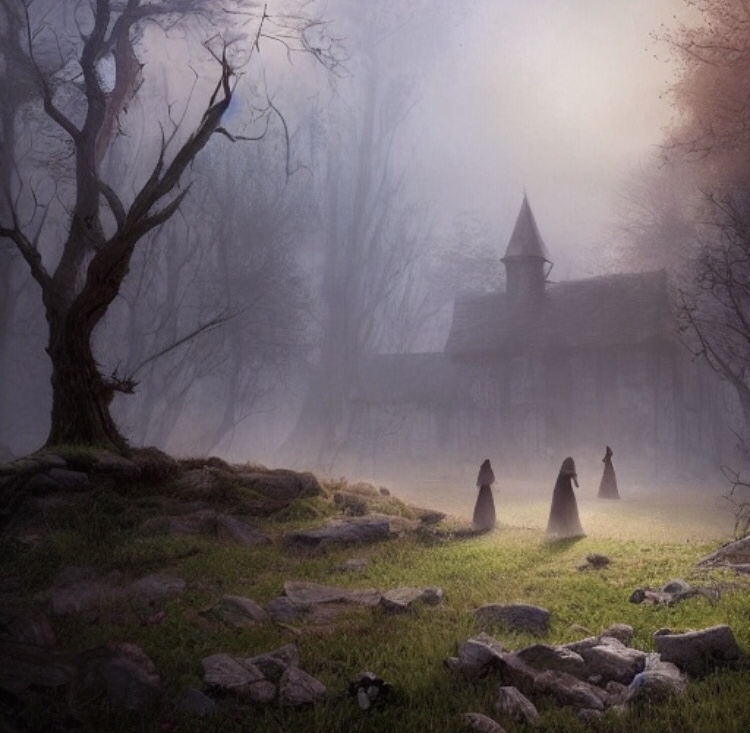
I came across a painting someone shared on Facebook that seemed to purposely lack context and was posted with a bit of cheek. I recognized it, though it took me a second to place it. It was one of one of Adolf Hitler’s paintings—which sent me on a bit of a thought train… It’s long been considered how different the world would be had Hitler just been accepted into art school instead of being rejected as he was. When most people see his artwork, they’re surprised to see the works are as good as they are. We of course rightly have a strong negativity bias and so considering that anything even remotely beautiful being expressed out of that mind is hard to fathom—and yet, we have the paintings. We have videos too. We see in private home videos that Hitler playfully flirts, enjoys the company of children, and plays with his dog. Even individuals who are responsible for some of the worst atrocities in history have started out as seemingly normal individuals with joys, interests, and hobbies, just like anyone else. Villains are not simply born evil, but rather are shaped by a variety of factors, including past experiences, social conditioning, and personal choices.
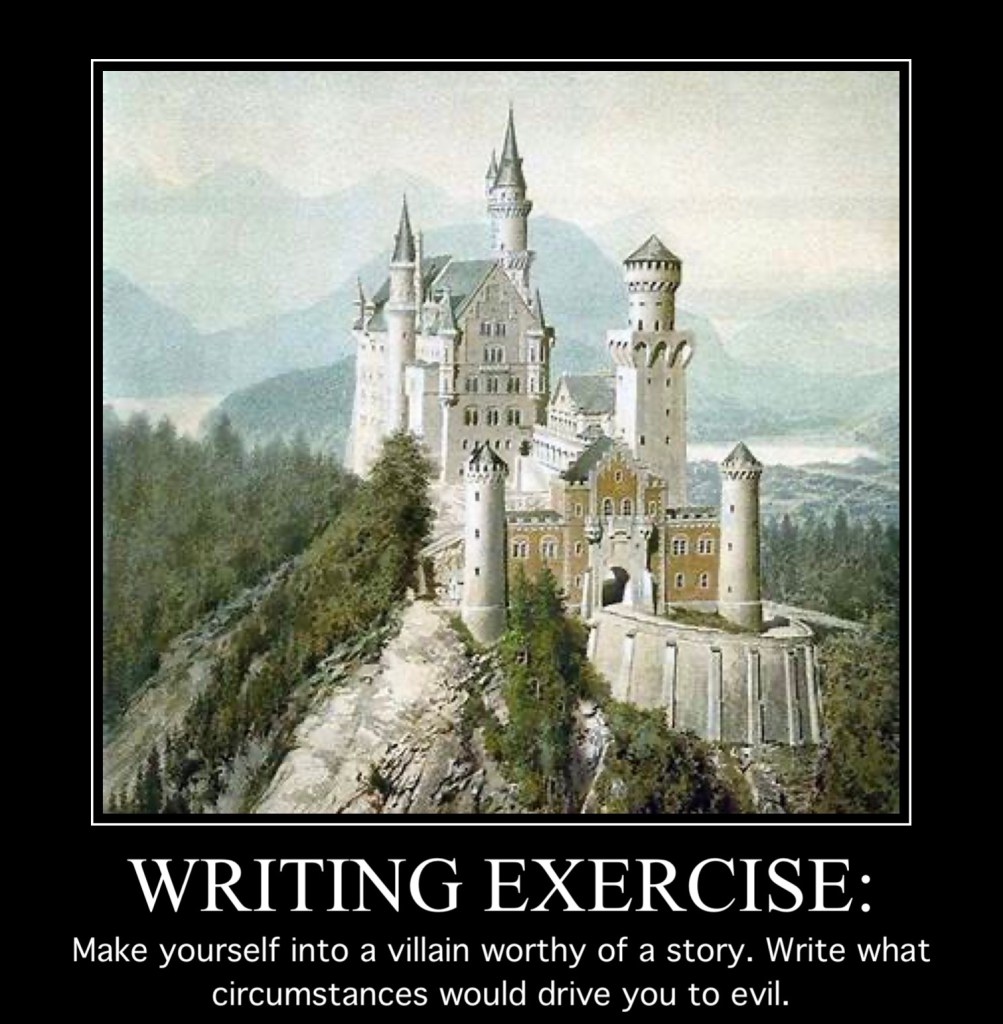
Based on this, I wrote this writing exercise and posted it to my Instagram. It got more responses than usual, and so I thought it might be worth looking at a little deeper. (And yes, that castle painting is one of Hitler’s works of art.)
The question of how normal people can do evil things has puzzled psychologists and philosophers for decades. While it’s easy to understand why some individuals commit horrific acts due to a lack of empathy or sociopathy, it’s harder to comprehend how ordinary people can engage in cruel and immoral behavior.
One well-known psychological experiment that sheds light on this phenomenon is the Stanford Prison Experiment. In this study, participants were randomly assigned to be either guards or prisoners in a simulated prison environment. Despite being told that the experiment was only a simulation, the guards quickly began to engage in abusive and dehumanizing behavior towards the prisoners, while the prisoners became increasingly submissive and demoralized. The study was ended early due to the extreme and unethical behavior of the guards.
Another example of normal people doing evil things is the psychology of the SS in Nazi Germany. The SS was originally formed as a paramilitary organization to protect Adolf Hitler and other Nazi leaders. Over time, however, they became increasingly involved in the persecution and extermination of Jews and other minorities. Many members of the SS were not sociopathic; rather, they were ordinary men who had been indoctrinated into the ideology of the Nazi party and felt a sense of duty to follow orders. As part of their training, SS troopers were forced to raise and bond with a dog, only to have it taken away and killed in front of them. This was done to desensitize them to killing and to eliminate any empathy they might have felt towards their victims. The psychological abuse inflicted on the troops was a calculated effort to indoctrinate them into the Nazi ideology and turn them into ruthless killing machines.
Aside from the calculated traumas inflicted on SS recruits, another psychological explanation for their indoctrination is the idea of “groupthink.” When individuals are part of a group, they may feel pressure to conform to the beliefs and behaviors of that group in order to be accepted and valued. In the case of the SS, members may have felt that they needed to support the goals of the Nazi party in order to be seen as loyal and patriotic Germans. These young men thought of themselves as heroes—or at least dutiful patriots… and yet, we can see that they were quite the opposite.
Even when we do things incongruent with and against our own moral ideals, we tend to want to justify our own actions. But what sorts of things could cause us not to just live inconsistently with what we believe, but rather make us abandon those ideals wholesale? Casting oneself as a villain in a writing exercise can be a valuable exercise in self-reflection and exploration of one’s own psyche. It can be a way to delve into the darker aspects of our own personality and to better understand what motivates us.
To write a compelling villain, one must first consider the character’s backstory and what might have led them down a path of evil or villainy. This requires examining one’s own experiences and identifying potential sources of trauma or psychological distress that could lead someone to become a villain.
For example, a character who experienced a traumatic event in childhood, such as abuse or neglect, may develop a deep-seated distrust of others and a desire for power and control. Alternatively, a character who has experienced significant loss or betrayal may become consumed by anger and seek revenge against those they perceive as having wronged them.
By exploring these potential sources of trauma and psychology, writers can create complex and nuanced villains who are more than just caricatures of evil. This can also help individuals to better understand their own motivations and behaviors, and to identify areas for growth and self-improvement.
In addition, casting oneself as a villain can be a way to explore the idea of personal responsibility and agency. It can be easy to blame external factors for our own shortcomings or failures, but writing oneself as a villain forces us to confront our own actions and choices and to take ownership of them.
Overall, casting oneself as a villain in a writing exercise can be a challenging and rewarding exercise in self-exploration and creativity. It allows us to examine the darker aspects of our own psyche and to better understand what motivates us, while also creating complex and compelling characters that are more than just one-dimensional villains.
I’m no different from anybody else who gets inspiration from music when it comes to creating non-musical works. Music changes our perceptions of things in ways we rarely even consider. There’s a fun internet trend going about lately that shows scenes from movies where the musical tracking has been removed. Unsurprisingly, the result is often quite comical. I’ve even resorted to using music to demonstrate tone and its effect on mood in my classroom. One of my favorite go-to examples of this is using the official Harry Potter and the Half-Blood Prince trailer juxtaposed with a fan-made trailer that uses different music and cuts to make it much more like a stereotypical teen comedy. The first thing my students note is the difference in music changes perceptions completely.
This change of perception was something I accidentally realized I needed when it came to writing Antiphon: Fire and Stone. Being a fan of much traditional fantasy like The Lord of the Rings, Harry Potter, or Wizard of Earthsea, I realized that my earliest abandoned attempts were much too derivative—maybe not so much in plot but rather in style. I was born in the mid-80s in the American South. So even though I grew up in touch with my Scottish heritage, I’m hardly British like Tolkien or Rowling, and while I’m an American like LeGuin, I’m from a very different generation. I slowly began to realize that I wanted to begin reshaping the fantasy world of Antiphon into something that was a bit more reflective of that American background that I grew up in. This was largely unconscious at the onset, but it became clearer to me as I began to reimagine the lives and relationships of my characters—particularly Kord and Meara. The epiphany came as I was in the midst of writing yet more character notes, wondering whether or not I’d actually get along with Kord as a friend. When I thought, “no, I think Kord is not really someone I’d be great friends with, but he’s someone I’d have wanted to be as a teenager,” I noticed I’d been listening to Blink-182 for hours. “That’s it! Blink-182 is the soundtrack of Antiphon!”
Blink-182’s music, particularly their earlier works, often revolved around themes and experiences that are common among teenage males, like Kord. Their songs capture the angst, insecurity, and rebellion that many young men feel as they navigate the complexities of growing up. I realized that Kord had these elements, but they were things I’d largely grown out of by high school.
Musically, Blink-182’s fast-paced, punk-inspired sound mirrors the energy and restlessness of teenagers. Their lyrics often deal with issues related to relationships, identity, and societal expectations. For example, songs like “Dammit” and “Up All Night” capture the confusion and frustration of trying to find one’s place in the world. This, I realized applied to the entire student-body of the Academy to one degree or another. They ostensibly have some direction, like Awyn or Beorn, but as the plot proceeds, even they find that their resolute direction isn’t as helpful and guiding as they originally thought. Most of the Tristans express some unsurety about their roles in the wider world once they leave the Academy. Meara particularly exemplifies this as she composes and performs a song herself which reflects many of the lyrics of Blink-182’s works. However, she is likewise a bit mysterious for Kord and the reader as her actions are sometimes inscrutable—which I intended to reflect the reality that Kord is experiencing as a young man in trying to understand this intelligent and alluring young woman.
Further, Blink-182’s songs touch on issues like depression, anxiety, and the pressure to conform. For example, “Stay Together for the Kids” addresses the pain of growing up in a broken family, and “Go” deals with a child’s perspective on his mother’s abusive relationship. These songs directly inspired my realization that Kord’s father was (at least at times) both physically and emotionally abusive, himself a broken and bitter man. One of my earliest drafts had Kord’s father directly portrayed as a very loving, emotionally open widower—and resultingly Kord in the early drafts was just too damn well adjusted even given the upheavals in his life.
Externally, Blink-182’s music reflects the challenges that teenage boys face in their interactions with the world around them. Their songs often confront societal norms and expectations and highlight the struggle to find acceptance and belonging. Songs like “Anthem Part Two” celebrates the rebellious spirit of youth, and it played a role in both Kord’s and Awyn’s rebellious and impulsive natures.
Finally, it’s important to note that not all of Blink-182’s work is as serious as this article might make it sound. In fact, much of their work is light-hearted and comical—just like teenagers are apt to be. I felt like it gave me a great balance to figure out how to step back into the mind of a young adult, and with so many different songs, figure out how the various themes were central to many of the characters.
So that’s how I discovered and came back to analyze how Blink-182 shaped Antiphon: Fire and Stone.
Sexual selection refers to the process by which certain traits are favored in a species due to their attractiveness to potential mates. In the human species, sexual selection is often driven by females, who have the ability to choose their partners based on a variety of factors. One key factor in female sexual selection is the display of traits that signal good genes and overall fitness, such as physical attractiveness, intelligence, and social status.
Research has shown that women are more likely to choose partners who display traits associated with good health and genetic fitness, such as symmetrical facial features, a deep voice, and a masculine physique. In addition, women are often attracted to men who possess traits associated with social status and wealth, such as high levels of education or a prestigious occupation. These preferences may reflect the ancestral environment, where males who possessed these traits were more likely to provide resources and protection for their offspring, increasing their chances of survival and reproductive success.
When examining the portrayal of male love interests in harlequin romance novels, it becomes apparent that many of them fall into certain archetypal categories that appeal to female readers. The heroes in these novels often possess traits that signal strength, power, and status, and are frequently portrayed as vampires, pirates, werewolves, billionaires, and surgeons. These archetypes may serve as stand-ins for the traditional “knight in shining armor” fantasy, providing readers with a form of escapism and wish fulfillment. However, it is worth exploring how these archetypes fit into the larger context of female sexual selection, and how they reflect deeper psychological desires and preferences.
One common thread that runs through many of these archetypes is the idea of the “beastly” or “wild” male who is tamed and domesticated by the female protagonist. This trope is particularly prevalent in the portrayal of werewolves, vampires, and other supernatural creatures, where the male love interest is often depicted as a dangerous and unpredictable force that can only be controlled by the love of a good woman. This theme is also present in the portrayal of billionaire and surgeon characters, who may be emotionally closed off or otherwise distant until they are “tamed” by the female protagonist’s love. This idea of taming the beast taps into deeper psychological desires for control, safety, and security, as well as a desire to transform and shape our partners to fit our idealized notions of love and romance.
While the heroine archetype in romance novels often involves the taming of a beastly male, the male hero archetype frequently involves the opposite dynamic: the protection of a vulnerable female from a dangerous and unmitigated beastly threat. This theme is often seen in the portrayal of male characters as knights, soldiers, or other protective figures, who use their strength and bravery to shield their female love interests from harm. The contrast between these archetypes reflects broader cultural narratives about gender and power, with the male hero representing strength and dominance, and the female hero representing control and transformation. Despite these differences, both archetypes speak to deep-seated psychological desires for love, security, and protection.
The development of the male hero archetype can be traced back to ancient storytelling traditions, where men would tell tales of great heroes who possessed certain characteristics that were seen as desirable to potential mates. These characteristics included physical strength, courage, and intelligence, as well as the ability to provide for and protect their loved ones. Over time, these archetypes became embedded in cultural narratives, and were reinforced through literature, film, and other forms of media.
The male hero archetype can be seen as a form of appealing to the sexual selection governed by females across cultures in the human species, in which men who display these traits are seen as more attractive to potential mates. At the same time, these archetypes also reflect universal cultural ideals about masculinity and power, which have evolved over time in response to changing social and economic conditions.
Despite their historical roots, the male hero archetype remains a powerful and enduring cultural trope, reflecting deep-seated desires for strength, courage, and protection. While the specific characteristics of the hero may change over time, the underlying psychological motivations remain the same, and continue to shape our cultural narratives and our ideals of romance and love.
I decided to look for this in my own writing, and while it’s obviously present in The Legend of Tam Lin, the plot and characters are products of Scottish folklore. I turned to Antiphon: Fire and Stone to see if this concept shows up, and I think it does. Kord, who struggles with his supernatural ability to conjure up fire, is in a great sense beastly and untamed. However, he is seeking to control it and finds great help and solace with his romantic interest in the tale, Meara. Awyn, on the other hand, being a postulant monk has no mitigating romantic interest, and though his gift is much less “beastly” than destructive fire, he has a troublesome knack for acting impulsively and rashly (to his detriment) that his platonic friends do not do well to wholly mitigate before the damage is done. I would be curious to hear what you think of this analysis and hope you check out Antiphon: Fire and Stone on Amazon.
Below is Chapter 2: Roughspun from my fantasy novel Antiphon: Fire and Stone.It’s the introductory chapter for Awyn, one of the two protagonists of the story. I always debated about whether or not it should be the first chapter. I have always enjoyed writing Awyn and his friends much more than Kord. I think maybe because I liked having established relationships to guide the character–and the dialogue.
Awyn scratched his neck. The itchy roughspun habit still aggravated his skin. He supposed it would eventually stop bothering him as he toughened to his new clerical robes. He lay prostrate on the stone floor of his dormitory, hoping the new ritual didn’t bother his roommate. Trying to think of something else to pray for, he drifted to sleep.
Stiffness and sticky drool waited for Awyn as he woke. Beorn nudged him with his foot. “The King of All loves prayer,” he said, “but he never asked you to sleep on the floor for him.”
“Oh aye, I suppose he…” Awyn stretched, “didn’t.” He sat up, and it felt like most everything ached just a wee bit. “I’ll get better at it.” Though he wasn’t quite sure how yet.
“Aye, aye. So, are you ready to ride this morning? Master Artea has me teaching our little cohort to tilt at the Ballish quintain.” Beorn smiled broadly as Awyn groaned. “It’ll be fun!” said Beorn. “Besides, whether you take holy vows or not, riding is a skill you really should have. And you need the practice.” He patted Awyn on the cheek and left.
The rising sun warmed Awyn’s cheek as he walked out to the field in his new sandals—the footwear of a monk. His toes grew wet with dew, and the chill spread over him. But he knew this was part of the point—casting off worldly comforts like shoes.
He saw he wasn’t last to arrive at least. One thing that wasn’t going wrong this morning, he thought. Alfrich wasn’t here yet. Typical, he thought. Fiona and Beorn each waited with a horse: Beorn with his big Iormundi destrier Straya, and Fiona with a sleek rouncey that looked quite small next to Beorn’s steed.
“Oi, Awyn—good mornin’ to you.” Fiona’s loud and thick Lanrean accent stood in such contrast to her frame. Her laugh only made that more pronounced. Covering her gaping mouth with one hand and pointing at Awyn’s feet with the other, she said, “You can’t possibly be serious with those. You can’t ride in sandals.”
Awyn felt a bit of heat rise to his cheeks. “Fiona, I am a postulant—this is what I wear now.”
“Oi, I know all that,” she said, “but this ain’t traipsin’ through the winding roads, preachin’, tendin’ to the sick, feedin’ the poor. It’s ri-ding.”
Beorn casually piped in, “Clerics are permitted to wear boots to ride—you know that.”
I didn’t, actually. How did Beorn? he wondered. But rather than look a fool and admit his own ignorance, he shrugged, “I could wear them, but I need to learn how to wear these without complaint.” He fidgeted with his Imlass Tree pendant and frowned. His friends hadn’t made this decision, and they were still getting used to the changes too.
“So, where’s Alfrich?” asked Fiona.
“Late,” said Beorn.
She rolled her eyes. “Well, nar…”
“Is he still doing his ‘night thing?’” asked Awyn.
“Which one?” asked Beorn. “The gambling thing or the fighting thing?”
Awyn shrugged. “Either.”
“Then yes,” said Beorn.
“I thought Brother Cowlen got him to stop the gambling thing…” said Awyn.
“Well mostly,” said Beorn, “but I think he mainly just gambles on himself to win his fights.”
Fiona bit her lip. “Oi, fairly safe bet, yeah.”
Beorn nodded. “As long as he keeps it to fists, anyway.”
“What about Master Artea?” asked Awyn.
Beorn adjusted the bridle on his horse. “I told you, he tasked me with teaching today.”
“Oh, yeah,” said Awyn as he kicked the dirt with his heel.
Fiona patted the rouncey’s muzzle. “Well, how long we waitin’ for our noble scion?”
Awyn looked at the dirt accumulating on his feet. “Did he even come in last night?”
“Not sure,” said Beorn. “Did you hear him creep in during your prayers?”
Awyn shook his head.
Fiona raised an eyebrow. “Prayers?”
Beorn nodded seriously. “He stays up late praying now.”
Fiona narrowed her eyes. “That’s kinda obnoxious to do when people are sleep.”
“It’s silent…” said Awyn, “meditative.”
Fiona nodded. “Oh, oh, oh. I see, yeah. That makes more sense.”
As the trio continued to talk about Awyn’s new night-time routines, they saw the fire-red hair of their fourth cohort member, bobbing down the hill from the Academy wall to the tilting field. His gait had a deep swagger, and his face sported a nasty black eye. As he approached, Awyn caught the stench of sour ale on his breath.
“Sorry to be late,” said Alfrich, “had to detour through the orchard.”
“And why’s that milord?” asked Fiona mockingly.
Alfrich pursed his lips and gave a sidelong glance at Awyn. “Stayed out late.”
Still doesn’t trust me, thought Awyn as he adjusted his wool cap.
Beorn ran his hands roughly through his dark hair. “Look, we only have till Noothsday till we have that tournament over in Dorsidde. Can we all ride now?”
Alfrich frowned. “But there’s only two horses.”
Beorn threw up his hands. “Not all at the… just shut up, Alfrich. You’re riding first. Here.” Beorn handed Alfrich the reins to his great horse. “Take Straya, and just walk her down the route you want to take to the quintain, and then we’ll have a go at speed, then we will throw in the lance.”
Awyn narrowed his green eyes intently as Alfrich took the horse through the route, minding for any burrows or holes. Under his long baggy sleeves, he subtly mimicked the young noble’s actions with the reins—noting how he encouraged the beast with his heels. Alfrich had been riding since he could probably remember—that came part and parcel of being of any noble house—a class to which Awyn decidedly did not belong. He bit his cheek wondering why he and Fiona had to train with the lance when they’d never be allowed to use it in a tournament. Master Artea had said something about it being important to understanding the hastilude better, but Awyn wasn’t convinced there was that much wisdom in that. But whether he liked it or not, he knew Beorn was right, riding was a useful skill.
After Alfrich had made his two soft unarmed runs, Beorn handed him a blunt lance—just a long pole with a small, weighted bag on the tip. “Now run it again, slowly with—” Started Beorn, but Alfrich shot off on Straya at a gallop. He couched the lance bringing it down at the quintain’s round target mounted at one end of a cross piece and struck it near the edge. As the lance connected, the sandbag attached to the arm opposite the target swung around and walloped Alfrich on the back of the neck. He lurched forward on the destrier’s mane dropping the lance, and Awyn thought he saw him go limp—but Alfrich remained seated.
Beorn sighed tensely while Fiona crossed her arms with a smirk. It seemed a long time, but Awyn knew it was only a moment until Alfrich sat up again on the mount, hand on his neck, and brought Straya back to the group at a slow walk.
“That looked like it hurt somethin’ wicked, yeah?” said Fiona.
Alfrich chuckled and grinned. “I’ve taken worse.”
“Yeah,” said Beorn, “well if you just listened before running off.”
“Yes, yes—I know,” said Alfrich. “I’ll give you gray hairs or some such. I’ve tilted at a Ballish Quintain before.”
Awyn shrugged. “Didn’t look like it to me.”
Alfrich hung his head and sighed, still smiling. “The Brother is giving me pointers on tilting now?”
Awyn just shrugged again. He knew he couldn’t ride half as well as Alfrich, but he also couldn’t help taking a jab. That was how they were—or used to be. Awyn felt glad for the retort, but being only half sure Alfrich was being playful, he didn’t continue.
“He ain’t wrong, Al,” said Fiona. “You look drunk still.”
Alfrich swallowed. “I’m not drunk. I’m hungover. I’m tired. Might even wish I was drunk. But I’m definitely not.”
“I said ‘look drunk.’”
Fiona and Alfrich continued into bickering and Beorn sighed again, clearly exasperated. Awyn knew he’d been looking forward to teaching this lesson. He wanted to help get things back on track. “Okay, okay. Alfrich, I’m sorry. I’ll go next and I’m sure you can make fun of my run.”
Alfrich dismounted Straya and tried handing the reins over to Awyn. “Och, nope. Sorry, Awyn,” said Beorn, “but Straya is a bit much horse for you.” Take the rouncey through the same course: at a walk, at a run, then with the lance—walk and tilt.”
Awyn flushed a little at being turned away from Straya (though he knew full-well Beorn was right.) After the moment passed, he felt relieved to not have to manage the larger beast.
The rouncey proved a little skittish. Awyn’s path to and from the quintain was jagged at best—unlike Straya’s direct and steady pace as she’d carried Alfrich. But whether the differences were due to the differences in quality of the beasts, riders, or a combination, Awyn couldn’t tell. But he felt unhappy about it and tried to focus on the things he knew he needed to do. It felt so awkward being up off the ground like this—even though it wasn’t all that terribly high. He couldn’t anticipate the movement of the horse underneath him. The constant feeling of sliding off the saddle irked him. He gripped more tightly with his thighs, and his freckled knuckles grew white on the reins.
Awyn remembered back to his young childhood on the farm, seeing a boy thrown from a horse. The boy had fallen on his head and broken his neck and died there in the field. Awyn kept seeing the boy’s crooked neck and lifeless terrified eyes.
“Well done, now a little faster,” called Beorn. “Take it at more of a trot—hold off on the cantor.”
Awyn nodded, unsure how exactly to “hold off on the cantor.” He kicked his sandaled heels into the horse, and she trotted forward, but he couldn’t keep her steady. His heels bounced around and the reins, while tight in his hands, weren’t steadying her course. Beorn shouted instructions, and Fiona encouragement—Alfrich just stood smirking, arms akimbo. The young rouncey stopped in the tall grass and began grazing.
When he heard Fiona stifle a cackle, Awyn considered he’d been given a troublesome horse on purpose. But as he patted the rouncey on the neck, they both saw a snake slither, and as she spooked, leaping to the side, Awyn slipped off her back, his sandal caught in the stirrup. She bolted through the grass and into the woods dragging Awyn behind her. Unable to loose his foot, Awyn took hoof and ground to body and head. He felt the horse jump again, tearing his sandal free from his foot and his foot free from the stirrup.
He felt like he floated for a moment—then he firmly kissed the dirt. He struggled to inhale as every part of him seemed to ache. He opened his eyes and couldn’t bring them in focus. But his nose still worked as he smelled the unmistakable reek of rotting meat close by. And as that registered, he heard soft padding and stamping in the leaves—too soft, too small to be the horse. He rolled over onto his side—still having trouble focusing, but the growls and yips gave them away—curren. The wild dogs began to encircle him. The new danger helped him regain his senses. He found a short thick stick by him and took it as he stood—the pain in his foot and ribs felt sharp, but nothing he couldn’t handle. He saw now that the reek came from a body—a human body—or at least the bottom half of one. He’d interrupted their meal.
I can’t let them continue desecrated that body, he thought. He swung at one of the three curren with the stick. It backed away, as the others closed some distance. Awyn changed targets, recentering himself to the dead body—defending it. He continued like this only a short time but exhausted himself nevertheless until one of the curren managed to slip behind him and leap on his shoulder, tearing into his habit exposing his heavily scarred back. He cracked the stick on the back of the curre, but the other two clung to him already. He collapsed under the assault, but then the heavy hoof falls he felt underneath him carried one away with a shrieking whine and the others fled.
Beorn had broken the practice lance on the curre. It weakly limped off. Beorn dismounted and caught Awyn as he tried to stand and set him gently on the ground. Alfrich and Fiona too came running into the clearing.
Beorn checked Awyn over for wounds. “What happened? Oh, they got you. Damn…”
Awyn craned over his shoulder with gritted teeth, seeing the bloody wound on the back of his shoulder. The skin appeared to have been torn away. “It’ll be another scar.”
Fiona now too knelt by Awyn. “Let’s go clean it—animal bites can be bad bad. Brother Urskine’s got herbs to keep wounds from growing dark.”
Awyn smiled, he knew he’d be fine. Fiona didn’t know what he could do yet but now was as good a time as any. Awyn took a deep breath and put his hand on the loose flap of torn skin, spreading it flat back over the wound. He hummed to himself one of his favorite hymns—which was in part concentration, but also in part so he could cover the soft humming sound that came from his hand.
Beorn sat back and watched what Awyn knew he’d seen before on at least one occasion, but Fiona stood up abruptly mouth agape. “You mean… Imlass burning! How come no one ever told me?”
“Awyn follows the rules,” said Alfrich with his arms crossed.
“Didn’t you know about it?” said Fiona turning to the fiery-haired young man.
Alfrich shrugged. “Yeah, well I’ve seen him bathe and shit. He’s got a lot of scars. I asked questions.”
“Fi, just hush a moment and let him concentrate,” said Beorn as he began inspecting Awyn for other wounds. He turned back to Awyn. “You have a bad bruise on your ribs here.” Awyn flinched as Beorn touched the spot. “Aye, maybe broken.”
Awyn stopped humming and removed his hand from the wound. He wiped away the blood with his sleeve revealing a red and raw scar—an ugly but closed wound, for all purposes healed (but still quite tender to the touch.)
Awyn placed both hands on his side and began humming a different hymn. He got halfway through the first verse before he faltered. “I can’t… Guys, I’m spent. Has anyone checked out the body?”
“Body?”
“The legs over here. You don’t smell it?” said Awyn, gesturing.
Alfrich and Fiona walked over to where the curren had been eating. “Yeah, but… who?” said Fiona.
“They must’ve dug him up. Looks like the rest of him is just buried,” said Alfrich.
Beorn helped Awyn up to go inspect as well. The exposed legs were largely covered in roughspun trousers, with sandals on the feet, but the calves and thighs had been badly mangled. “We don’t bury people like this,” said Awyn.
“What with their legs out an’ all?”
“No, he means upside down,” said Alfrich.
“Or the woods? Not even a graveyard, everyone ought to be buried in a hallowed graveyard.” said Beorn.
“All of it’s wrong,” said Awyn. “The legs don’t look like they were ever buried. The curren didn’t dig them up. We never bury anyone upside down either. At least we don’t in the Maradian Kingdoms… well the Bethiri don’t. We allow for graves outside of graveyards though—but it’s not common where there are graveyards to be buried in. And there are at least three around here. Also, we don’t bury people in their pants. They get a burial shroud.”
All nodded their heads in deference to Awyn’s understanding of religious practice—as it slowly dawned on them what the implications of that might mean.
“Murder,” muttered Alfrich, Beorn, and Fiona in unison.
“Wait, what?” said Awyn.
Fiona rolled her eyes. “He’s been murdered, obviously.”
Awyn had been so focused on the ritual of things, he was quite taken aback at their unanimous declaration. “Wait, wait, wait…”
Alfrich shrugged.
Beorn nodded.
Awyn glanced down at his sun-tanned toes. “Then—we must inform the Brothers. Beorn, can you ride back and get Brother Eorlund?”
With an “Aye,” Beorn mounted Straya and was off.
“Fiona, scout around us to see if we’re missing anything,” said Awyn.
She nodded. “Right, yeah.”
Alfrich put up a hand to Awyn. “Let’s you and I look more closely at the body and then get your bossy-ass to your bed.”
Awyn nodded weakly—he felt happy to see Alfrich treating him a little more like normal—he’d been distant of late, like his becoming a postulant to the Tristan Order had been a personal insult.
Alfrich knelt where the torso was presumably buried. “Packed pretty tight—but it’s a bit soft. It’d be a stretch, but maybe he just fell into some mud and drowned?”
Awyn shook his head. “Aye, that’s a stretch—with his legs out?”
“Then foul play is the most likely,” said Alfrich.
“Wouldn’t the point be to hide the body then?” asked Awyn.
Alfrich shrugged. “Got spooked and couldn’t finish? Made too shallow of a hole and went with it? I don’t know. What are you thinking?”
“Maybe you are all right and this is murder,” said Awyn, “but there is something strange about this ‘burial’ if it is that at all. I think I need to go to the library and see what I can dig up on burial practices of people other than our own.”
“Oi! Boys, take a gander at this…” Fiona had made her way back to the two holding a ring of keys. “These. Now tell me whose these are.”
Slow recognition crept up Awyn and Alfrich’s faces. Awyn knew exactly to whom those keys belonged. He glanced at the mangled legs and back to the keys. “Old Etrick…” they muttered together.

 J.E.B. Mungall